Guide · Visalia, Tulare & Kings County
Drain field repair: seven signs your leach field is failing, and what each one means
The drain field is the expensive half of a septic system and the half nobody looks at. Most failures announce themselves months ahead of time — if you know what a wet patch, a green stripe, or a gurgling toilet is actually telling you.
Published 2026-09-13 · cost figures reviewed September 2026
As of 2026-09, drain field rejuvenation near Visalia, CA runs about $1,000–$5,000 and a full drain field replacement $3,000–$10,000 (California regional figure; national data runs $3,000–$15,000) — and the earliest sign of failure is usually a stripe of unusually green grass, not standing water.
Visalia Septic Pro — Get free quotes
How a drain field works, in one paragraph
The tank does the settling: solids sink, grease floats, and relatively clear liquid (effluent) leaves through the outlet. The drain field — a distribution box feeding a set of perforated pipes laid in gravel trenches — spreads that effluent through the soil, where bacteria finish the job. Everything that goes wrong with a field comes down to one of two things: too much liquid arriving, or the soil losing its ability to absorb it. The signs below are the system telling you which.
The seven signs, and what each one actually means
- 1
Standing water or a spongy, soggy patch over the field
What you see: Effluent is arriving faster than the soil can absorb it and is rising to the surface. In summer, when nothing else in the yard is wet, this is the clearest single sign there is.
What it means: Could be a full tank pushing solids into the field (fixable with a pump-out and time), a crushed or bellied line dumping all the flow into one spot, or a saturated field at the end of its life.
- 2
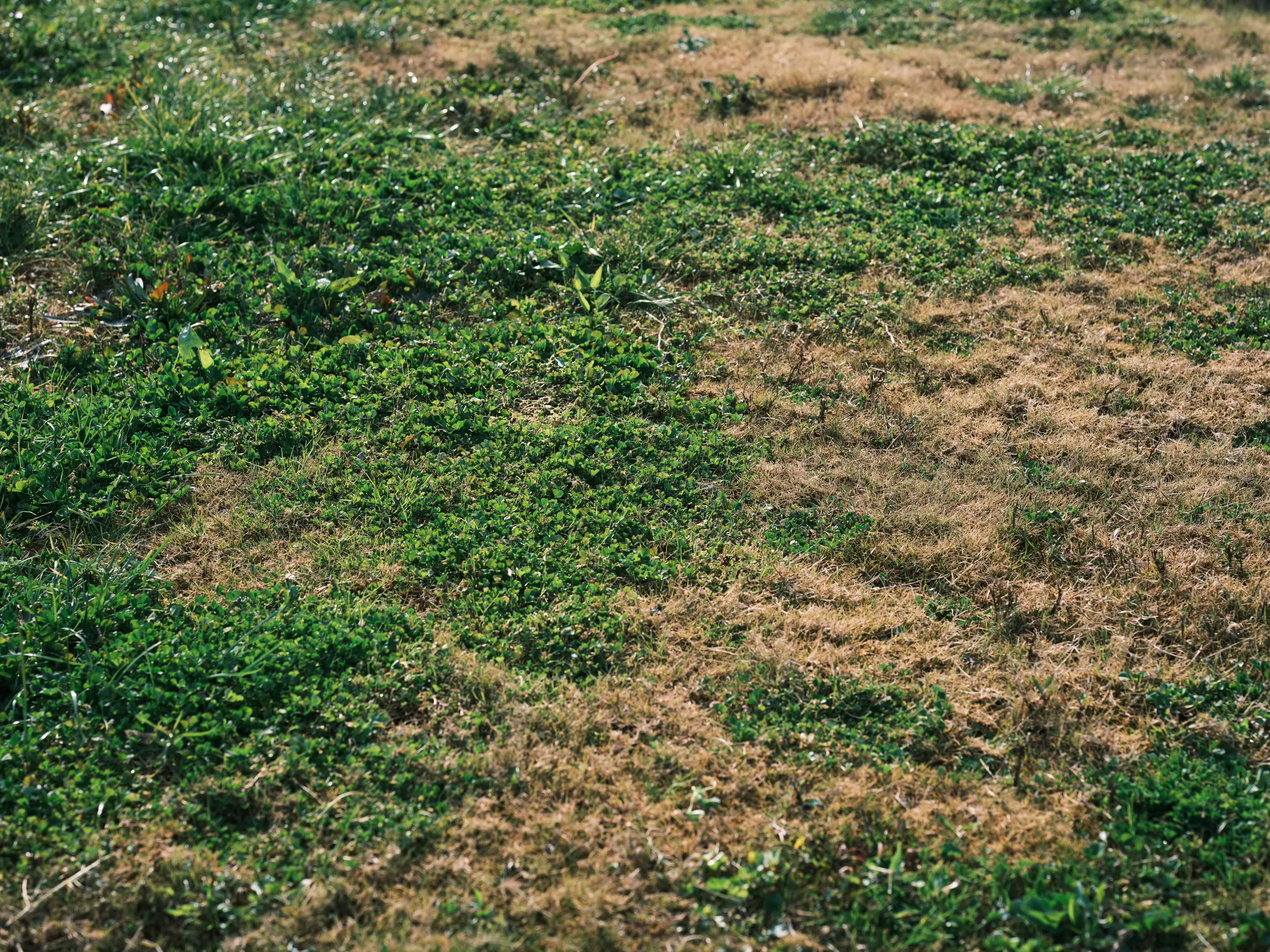
A stripe of unusually green, fast-growing grass
What you see: Grass over the leach lines is greener and taller than the lawn around it, especially in a dry stretch.
What it means: The lines are surfacing nutrient-rich effluent close enough to the roots to fertilize them. Early-stage version of the wet patch above — often the first sign, months before anything is visibly wet.
- 3
Sewage odor outdoors, near the field or the tank
What you see: A septic smell in the yard rather than in the house.
What it means: Gases and effluent are escaping at the surface instead of being absorbed. Near the tank lids it can be a bad seal or a full tank; over the field it points to the field itself.
- 4
Slow drains and gurgling throughout the whole house
What you see: Not one slow sink — every fixture, with toilets gurgling when the washing machine drains.
What it means: The tank cannot discharge into the field, so it backs up toward the house. A single slow drain is a clog; all of them at once is the system. A pump-out relieves it temporarily; if it returns within weeks, the field is the problem.
- 5
Effluent flows back into the tank after pumping
What you see: Something you will not see yourself — the pumper does. After the tank is emptied, liquid runs back in from the outlet pipe.
What it means: The field is holding water it cannot absorb. This is the single most reliable early diagnosis, which is why a pump-out with a real look inside is worth more than any yard walk.
- 6
Sewage backing up into the lowest drain in the house
What you see: A shower or floor drain on the lowest level fills with wastewater.
What it means: The system is completely blocked or completely saturated. This is an emergency — stop using water and get someone out today.
- 7
Nitrates or bacteria showing up in a well test
What you see: On a rural Tulare or Kings County parcel with its own well, a routine water test comes back high in nitrates or coliform.
What it means: Not always the septic system — agricultural runoff is a real factor in the Valley — but a failing drain field near a well is one of the causes a lab will tell you to rule out. Treat it as a reason to inspect, not proof.
Why fields fail around Visalia specifically
Four causes account for most failed fields, here as anywhere, and only one of them is age.
- Solids reaching the field. A tank that goes too long between pump-outs, or an outlet baffle that has failed, lets solids through to the trenches. Over years they form biomat — a black, slimy layer in the soil — and the field stops absorbing. This is the reason the pumping interval matters so much more than most homeowners think.
- Hydraulic overload. More water than the field was designed for: a household that grew, a leaking toilet running all day, a water softener discharging into the tank, or laundry for six done in one afternoon. Hardpan under the field makes this worse — there is less soil to soak it up.
- Physical damage. A vehicle, a tractor, or a stack of building material parked over the trenches crushes pipe and compacts the gravel. Roots from a nearby tree do the same from below. On rural parcels this is the most common non-age cause.
- Age and undersizing. Fields wear out. If the original system was sized for a two-bedroom cabin and the house is now four bedrooms, no amount of maintenance fixes the arithmetic.
What is not a cause here: expansive clay. Visalia-area soils are alluvial sandy loams and loamy sands with hardpan at depth, not the shrink-swell clays that crack systems elsewhere. If a contractor blames "clay soil" for a Tulare County field failure, ask them to show you the soil.
Repair or replace: what each path costs
No Visalia company publishes drain field pricing, so these figures are California regional and national, labelled by scope. Full methodology and every other figure on the site are on the septic cost guide.
| Path | Typical cost | Source |
|---|---|---|
| Pump-out first (diagnosis + relief) | $350–$650 | California standard tank; Visalia-area range on the pumping page |
| Outlet baffle repair | $250–$900 | National HomeGuide, national (read Dec 2025) |
| Distribution box repair/replacement | $500–$1,500 | National HomeGuide, national (read Dec 2025) |
| Root removal from lines | $600–$1,600 | National HomeGuide, national (read Dec 2025) |
| Line repair (patch to full run) | $150–$3,800 | National Wide range because it spans a patched section to a fully excavated replacement run. |
| Drain field rejuvenation | $1,000–$5,000 | National HomeGuide, national (read Dec 2025) |
| Drain field replacement — California | $3,000–$10,000 | California Lanik Septic, California regional guide (published Mar 2026) |
| Drain field replacement — national | $3,000–$15,000 | National HomeGuide, national — average $7,900 (read Dec 2025) |
| New leach line, per foot | $20–$45/linear ft | National HomeGuide, national (read Dec 2025) |
| Full tank + field replacement — California | $6,000–$10,000 | California Lanik Septic, California regional guide — complete tank + drain field (published Mar 2026) |
The escalation to avoid: Sierra Sanitation puts a fully failed system at $10,000–$20,000 to replace, against a pump-out every 3–5 years at $350–$650. Neither the county permit fee nor its review time is published — call (559) 624-7400 before budgeting a replacement, and expect the county to review where a new field can go.
What to do before you call
- Cut water use now. Every gallon makes a saturated field worse. Pause laundry, shorten showers, fix any running toilet today.
- Keep everything off the field. No parking, no equipment, no building material. If you're not sure where the field is, don't guess — find the tank first; the field runs downhill from it.
- Note what you've seen and when. When the wet patch appeared, whether it came after rain or heavy use, how long since the last pump-out. This is the diagnosis; the contractor confirms it.
- Start with a pump-out and a look, not a replacement quote. A county-registered pumper can tell you in an hour whether liquid runs back from the field. That one observation decides whether you're looking at a baffle, a line, or a new field.
- If it's the field, get a C-42 contractor and verify them. Drain field work is CSLB C-42 Sanitation System Contractor work and needs a county permit. Here's how to check the license in about a minute.
If sewage is surfacing or backing into the house, that's today's problem, not this week's — go to septic repair and emergency backups.
FAQ
Drain field questions Tulare and Kings County homeowners ask
What does drain field repair cost near Visalia, CA in 2026?
It depends entirely on whether the field can be saved. Rejuvenation (mechanical or biological treatment of a field that is clogged but structurally intact) runs $1,000–$5,000; a full drain field replacement runs $3,000–$10,000 in California regional data and $3,000–$15,000 nationally, at roughly $20–$45/linear ft of new leach line. All figures are national or California-wide — no Visalia-specific drain field pricing is published.
Can a failed drain field be fixed without replacing it?
Sometimes. If the problem is upstream — a full tank, a failed outlet baffle letting solids through, a crushed or bellied line, a distribution box sending all the flow to one trench — fixing that and letting the field rest can bring it back. If the soil itself is clogged with biomat (the black, slimy layer that forms when solids reach the soil for years), rejuvenation treatments can sometimes restore absorption. A field that has been saturated for years, or is undersized for the household, generally needs replacement.
Does drain field repair or replacement need a permit in Tulare County?
Almost certainly yes. Most septic construction and repair work in Tulare County requires a permit through the Resource Management Agency / Environmental Health Division, (559) 624-7400, and replacing a drain field is squarely in that category — the county reviews the design, including whether the new field can go where the old one was. Hanford-area properties fall under Kings County instead. The county does not publish its fee schedule or turnaround time, so call before you budget.
Who is licensed to repair a drain field in California?
A CSLB C-42 Sanitation System Contractor. Drain field work is not pumping work — a pumping-only company is county-registered rather than CSLB-licensed and should hand you off rather than attempt it. Verify the C-42 license at cslb.ca.gov before signing; it takes about a minute.
Will pumping the tank fix a failing drain field?
It buys time, and it lets the pumper diagnose the field by watching for backflow. It does not fix a saturated field. If a pump-out solves the symptoms for a year or more, the tank was simply overdue; if they return in weeks, the field is the problem and pumping repeatedly just postpones a decision while costing you each time.
What is the Visalia-area soil like for drain fields?
Mostly alluvial sandy loams and loamy sands — soils that drain well when they are healthy — with a hardpan layer (the San Joaquin soil series) at depth in places that stops water from percolating below it. Fields sitting on shallow hardpan have less soil to work with and can saturate sooner. This is not expansive clay; the local failure modes are hardpan, compaction, and loose soil settling under poorly bedded pipe.
Related
Keep reading
- Septic repair & emergency backups →
The hub for everything that happens once a real problem is confirmed.
- Septic system installation & replacement →
When the field can’t be saved.
- How often to pump a septic tank →
The interval that keeps solids out of the field.
- Septic tank cleaning & inspection →
What a real inspection checks, and costs.
- Septic cost guide — Visalia →
Every figure, sourced and scoped.
Get free quotes
Get a drain field looked at
Describe what you're seeing in the yard and how long it's been happening. An independent professional serving your area follows up — a pumper first if it needs diagnosing, a C-42 contractor if the field itself needs work. No cost, no obligation.
- Cost to you: $0
- Coverage: Tulare and Kings County septic properties
This form isn't connected yet — lead routing is built in Phase 8/9 of the build plan. Nothing you type here is sent anywhere. It's shown to confirm layout, validation and the anchor the header and sticky-bar quote buttons point to.